The Mammogram Prep Item Most Checklists Omit: Your Supplement Record

Most mammography preparation instructions are reassuringly ordinary: skip underarm deodorant on the day of the exam, bring prior images if they were taken elsewhere, wear a two-piece outfit, and arrive a few minutes early. One item is less commonly listed but equally practical: a current, specific record of the supplements you take, including any product marketed as a breast enhancement pill.
The point is not to suggest that every supplement is dangerous or that imaging cannot proceed. It is to give the radiologist and technologist the same kind of context they already expect for medications, surgeries, and breast symptoms. Disclosure is a routine safety habit, not a confession.
Why Supplement Disclosure Belongs on the Prep List
Breast imaging is interpreted with context. A radiologist reads the images alongside your history: previous films, breast density, hormonal status, prior biopsies, skin changes, and current symptoms. Supplements are part of that history, even when the evidence around them is uncertain.
Some products marketed for breast enhancement contain botanical ingredients that have shown estrogen-like activity in laboratory settings. Human evidence is limited, and formulations vary widely, so it would be inaccurate to claim that a given capsule predictably changes breast tissue or mammographic findings. The cautious position is simpler: the radiologist should know what you are taking, in what amount, and for how long, so that any question about interpretation can be raised before the report is finalized.
Disclosure also matters if the visit leads to a biopsy or other procedure. Certain supplements, including some botanical products and high-dose vitamins, may interact with medications or affect bleeding risk. Product-specific evidence is often thin, which is exactly why the ingredient list—not just the brand name—is useful.
What to Bring to the Appointment
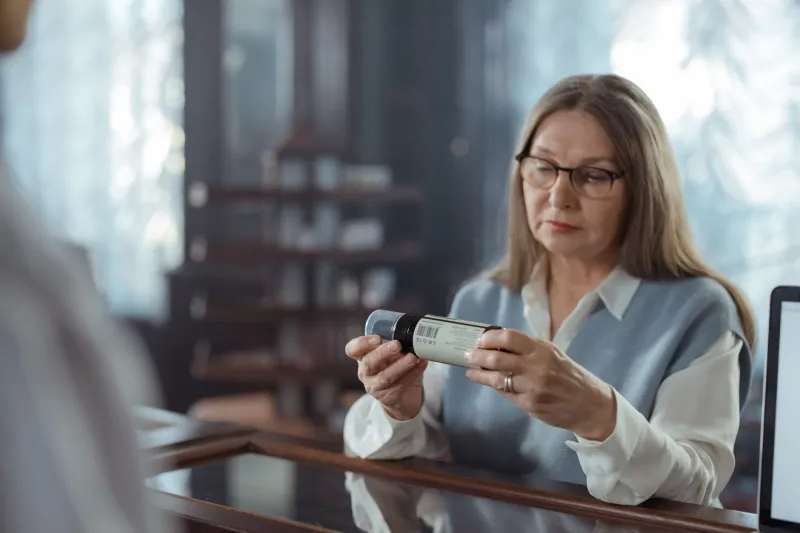
A printed or photographed label is more useful than a remembered product name. Marketing names can be vague, and formulas change. Bring or photograph the Supplement Facts panel, the serving size, and the lot number if it is visible.
A short written summary can help:
- Product name and manufacturer
- Serving size and how often you actually take it
- Date you started, and whether use has been continuous
- Other supplements, vitamins, and herbal teas or powders
- Prescription and over-the-counter medications, especially blood thinners and anti-inflammatories
- Allergies and prior contrast reactions, if any
- Prior breast imaging locations and dates
- Any breast symptoms and when they began
This does not need to be elaborate. A note on a phone or a single printed page is enough. The goal is accuracy, not a dossier.
Symptoms Worth Reporting, Not Diagnosing
The imaging facility will ask whether you have noticed changes. Answer plainly and avoid trying to decide in advance whether a symptom is “probably nothing.” Report new lumps or thickening, focal pain that persists, nipple discharge, skin dimpling or redness, a change in nipple position, or a new asymmetry.
Timing is helpful. If a symptom appeared after you began a supplement, say so without implying cause. “I started this product in March and noticed the discharge in May” is more useful than “the pill probably caused it.” The first statement gives the clinician a timeline; the second offers a conclusion the evidence may not support.
How to Ask Whether an Ingredient Could Complicate Interpretation
You are entitled to ask a direct question, and it can be phrased without drama: “Is there anything in this ingredient list that could affect how you interpret the images or plan a biopsy?” You can also ask whether the radiologist wants the label included in your record.
A technologist may not be able to answer ingredient-specific questions, but they can route the information to the radiologist or your referring clinician. If the question is important to you, ask that it be noted in the visit record. You can also raise it with the ordering clinician before the appointment.
Be wary of two extremes. One is secrecy—omitting supplements because you fear being judged. The other is overinterpretation—assuming that any botanical ingredient automatically explains a mammographic finding. Neither helps. The useful middle ground is accurate disclosure and a clear question.
If Someone Suggests Stopping Before Imaging
A clinician may advise pausing a supplement before a procedure, especially if bleeding risk or medication interactions are a concern. Do not stop a prescription medication, or a supplement you take for a diagnosed condition, solely because of a general online instruction. Ask who is making the recommendation, what evidence supports it, and how long a pause would be needed.
For many supplements, the evidence is not strong enough to support a universal stop-before-mammogram rule. The decision should be individualized, especially if you take anticoagulants, have a bleeding disorder, or are preparing for a biopsy.
A Short Script for Check-In
“I take a supplement marketed for breast enhancement. Here is the label and my start date. I also have a note about my symptoms. Could you please make sure the radiologist sees this before the report is finalized?”
That is sufficiently specific, respectful, and clinically relevant. It also creates a record. If the front desk seems unsure, ask for the information to be added to your chart or sent to the interpreting physician.
After the Appointment
Keep a copy of what you submitted. If you are called back for additional views or a biopsy, mention the supplement again, particularly if you have started or stopped anything since the mammogram. Continuity matters more than a single disclosure.
The Bottom Line
A supplement record is a low-burden addition to mammography preparation. It does not replace prior films, symptom reporting, or clinician judgment. It simply gives the imaging team the context they need to ask better questions. In 2026, with supplement shelves crowded and labels inconsistent, that small procedural step is a reasonable part of informed breast care.