Nine Ad Phrases That Should Prompt a Pause Before You Buy Breast Enhancement Pills
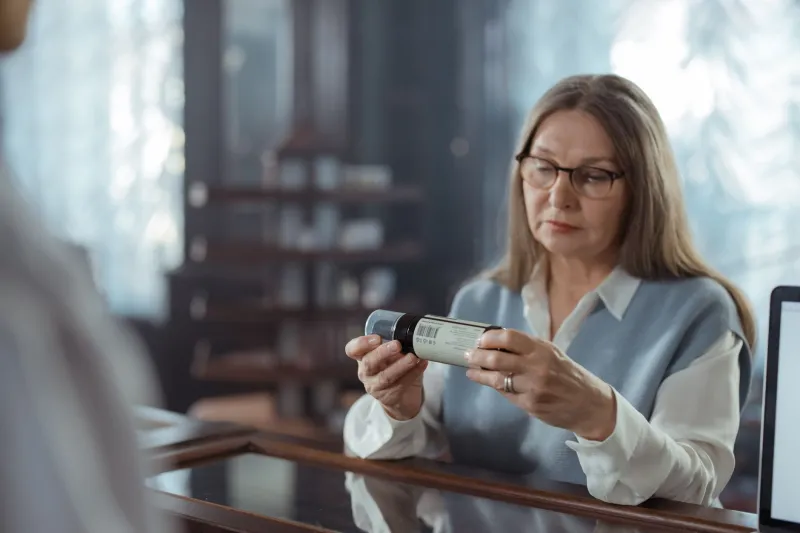
Breast-enhancement supplements occupy a crowded and lightly regulated corner of the US market. Under the current dietary-supplement framework, products do not need premarket approval from the Food and Drug Administration for safety and effectiveness before sale. That makes advertising language especially important—and especially easy to overread. The phrases below are not automatically dishonest. They are, however, signals to slow down and ask what is actually being claimed.
Why a Phrase Can Sound Scientific Without Proving Much
Dietary supplements may carry structure/function claims—statements about how an ingredient affects normal body function—without the evidence required for a drug claim. A phrase can be technically lawful and still be vague. The practical question is not whether an ad uses polished language. It is whether the language points to a measurable outcome, a named ingredient at a disclosed dose, and evidence that a reasonable clinician would recognize. For a consumer comparing products, that standard is more useful than a slogan.
Nine Phrases to Examine Closely
1. “Hormone balancing.” This phrase implies a known imbalance and a predictable correction. In practice, hormones vary by cycle, age, medication, and health status, and no supplement ad can diagnose a hormonal problem. The phrase does not prove that a product changes estrogen, progesterone, or prolactin in a meaningful way, nor does it prove an effect on breast tissue.
2. “Phytoestrogens.” Phytoestrogens are plant compounds that can bind to estrogen receptors, but their effects are not uniform. They may be weak, mixed, or tissue-specific, and the evidence for breast enhancement is limited. The term describes a category, not a benefit. For people with hormone-sensitive conditions or those using hormone therapies, it is a reason to ask a clinician rather than assume safety.
3. “Clinically studied ingredients.” This often means one ingredient—sometimes at a different dose, in a different form, or in a different population—has been studied. It does not mean the finished product was tested, nor that the study measured breast size. Look for the actual citation, dose, duration, and outcome. If the ad does not provide them, the phrase is doing more marketing work than scientific work.
4. “Natural.” Natural is a source description, not a safety rating. Botanicals contain active compounds, and some can affect bleeding, blood sugar, liver enzymes, or medication absorption. Arsenic and poisonous mushrooms are natural too; the word does not substitute for a safety assessment.
5. “Doctor-formulated.” This phrase does not identify the doctor’s specialty, role, or compensation, and it does not prove clinical testing. A formulation can be physician-created and still lack evidence for the advertised outcome. Ask who formulated it, what evidence they relied on, and whether the dose matches published research.
6. “Proprietary blend.” A proprietary blend can hide individual ingredient amounts. Without doses, consumers and clinicians cannot compare the product with studied preparations or assess whether a particular ingredient is present at a meaningful level. For interaction questions, an undisclosed dose is a practical obstacle.
7. “No side effects.” No supplement can guarantee that. Side effects may be uncommon, mild, or poorly reported, but that is different from absent. Dietary-supplement adverse events are voluntary-reporting systems, so silence in a testimonial section is not evidence of safety. People taking medications, pregnant or breastfeeding people, and those with liver or kidney disease deserve particular caution.
8. “Supports breast health.” This is a broad structure/function phrase. It does not define breast health, specify a measurement, or promise growth. It may be lawful while still telling a shopper very little. Treat it as an invitation to read the ingredient list, not as a conclusion.
9. “Risk-free” or “money-back guarantee.” A refund policy addresses customer satisfaction, not safety or effectiveness. It does not cover time lost, medication interactions, or medical evaluation. A generous guarantee can coexist with weak evidence.
A Practical Label Checklist
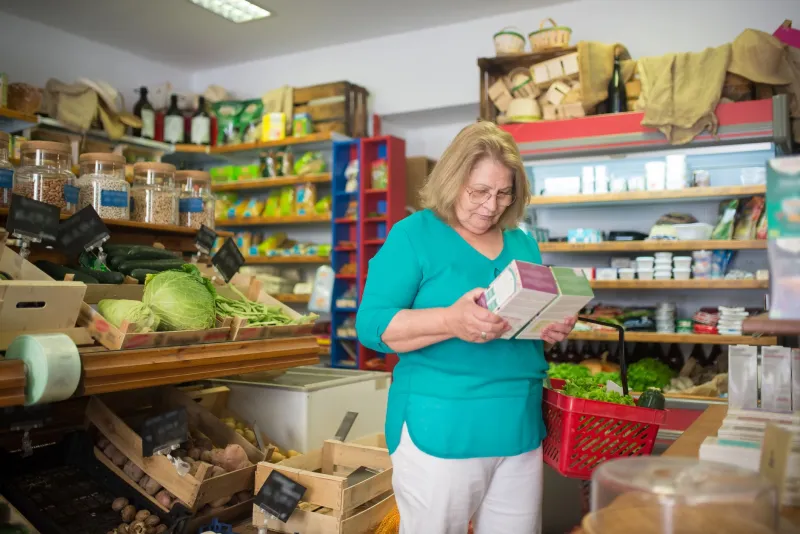
Before buying, compare products on these points:
- Full ingredient list, including botanical names and plant parts.
- Amount per serving for each ingredient, not just a total blend weight.
- Serving size and directions, including whether the label suggests cycling or continuous use.
- Manufacturer name, physical address, and a way to contact the company.
- Allergen and excipient information.
- Any third-party testing seal, with the understanding that seal programs vary.
- Clear warnings for pregnancy, breastfeeding, medication use, and medical conditions.
- A citation for any study used in advertising, with dose and outcome visible.
Where to Check Before You Buy
In the US, the FDA maintains a warning-letter database that can show whether a company or product has received regulatory attention. The Federal Trade Commission also has consumer resources on deceptive advertising. For adverse events, MedWatch is the FDA’s reporting system; consumers and clinicians can submit reports, and the existing database can be searched for patterns. These tools are imperfect and do not prove a product is safe or unsafe, but they are more informative than a before-and-after photo.
A pharmacist can also review a supplement label against a medication list. That conversation is especially important for people using birth control, thyroid medication, blood thinners, or hormone-sensitive therapies. The goal is not to create alarm. It is to replace a marketing phrase with a specific question: what is in this product, at what dose, and what do we know about its interaction risk?
The Bottom Line
A breast-enhancement ad can be polished, lawful, and still unpersuasive. The checklist is simple: demand disclosed doses, named studies, and measurable outcomes; check regulatory and adverse-event resources; and ask a clinician when medications or hormone-sensitive conditions are part of the picture. In 2026, the most useful consumer skill is not spotting the single “bad” word. It is recognizing when a phrase is being asked to carry more proof than it can bear.