Herbal Is Not Inert: A Cautious 2026 Guide to Breast Enhancement Pills and Medication Interactions
“Natural” is often used in supplement marketing as if it were a synonym for gentle. It is not. Botanical ingredients contain chemically active compounds, and those compounds can affect how the body absorbs, breaks down, or responds to medications. That does not mean breast-enhancement pills are dangerous for everyone. It means the relevant question is product-specific and person-specific: which ingredient, at what dose, with which medication, and with what plausible mechanism?
Why “Natural” Is a Starting Point, Not a Safety Rating
Dietary supplements are regulated differently from prescription drugs in the US. They do not receive premarket approval for effectiveness, and the FDA’s oversight is largely post-market. Labels can vary in accuracy, and products marketed under similar names may contain different plant parts, extracts, or doses. Reviews of the evidence for breast enhancement with herbal ingredients generally find limited and inconsistent support. That uncertainty matters for anyone considering a supplement alongside prescription medication.
Four Ingredients Commonly Found in Breast Enhancement Products
Fenugreek. Fenugreek seeds contain soluble fiber and compounds that have been studied for blood sugar effects. It can cause gastrointestinal symptoms and may lower blood glucose, which matters for people using insulin or other diabetes medications. Case reports and theoretical concerns have raised questions about interactions with anticoagulants and about hormonal effects, although the evidence is not definitive. Fenugreek can also impart a maple-syrup odor to sweat or urine.
Red clover. Red clover contains isoflavones, which are phytoestrogens. Because phytoestrogens can interact with estrogen receptors, the ingredient deserves a specific conversation for people with hormone-sensitive conditions or those using tamoxifen, aromatase inhibitors, or other hormone-directed therapies. The evidence is not strong enough to declare a clear risk for every person, but it is also not strong enough to assume neutrality. Some clinicians also ask about bleeding risk when botanicals are combined with anticoagulants.
Hops. Hops contains prenylated flavonoids and has been studied for sleep and menopausal symptoms. It has phytoestrogenic activity and sedative-like effects, so it may be relevant for people using hormone therapies or central nervous system depressants. As with red clover, the clinical evidence is limited and product-specific. A supplement’s dose may differ substantially from the amounts used in research.
Saw palmetto. Saw palmetto is best known for prostate symptoms and has been studied for effects on 5-alpha reductase, an enzyme involved in testosterone metabolism. For women considering breast enhancement, the evidence is sparse. It may affect bleeding risk in theory, and people using anticoagulants or antiplatelet drugs should not assume it is inert. It can also complicate interpretation of some prostate-related tests in men, a reminder that “herbal” does not mean “without physiological effects.”
Medication Groups That Deserve a Specific Conversation
Birth control. People using combined hormonal contraceptives or progestin-only methods may ask whether phytoestrogens could interfere with effectiveness. The evidence is limited, and the answer is not a simple yes or no. The practical step is to review the specific product with a pharmacist and to use reliable contraception consistently; do not stop or change contraception based on an ad.
Thyroid medication. Levothyroxine absorption is sensitive to timing and to some foods and supplements. Fiber-rich products, calcium, iron, and certain botanicals can affect absorption or are best separated from the dose. Clinicians often advise taking thyroid medication on an empty stomach and separating it from supplements, but the exact interval should come from the prescriber or pharmacist.
Blood thinners and antiplatelet drugs. Warfarin, direct oral anticoagulants, aspirin, and clopidogrel all raise questions about additive bleeding risk. Some botanicals have theoretical or observed effects on platelets or clotting. A supplement that causes easy bruising, nosebleeds, or unusual bleeding should prompt a call to a clinician.
Hormone-sensitive therapies. Tamoxifen, aromatase inhibitors, and other hormone-directed treatments are used in breast cancer care. Phytoestrogen-containing supplements are a particular area of uncertainty. The appropriate adviser is the treating oncologist or a pharmacist with oncology experience, not a supplement retailer.
Questions to Bring to a Pharmacist or Clinician
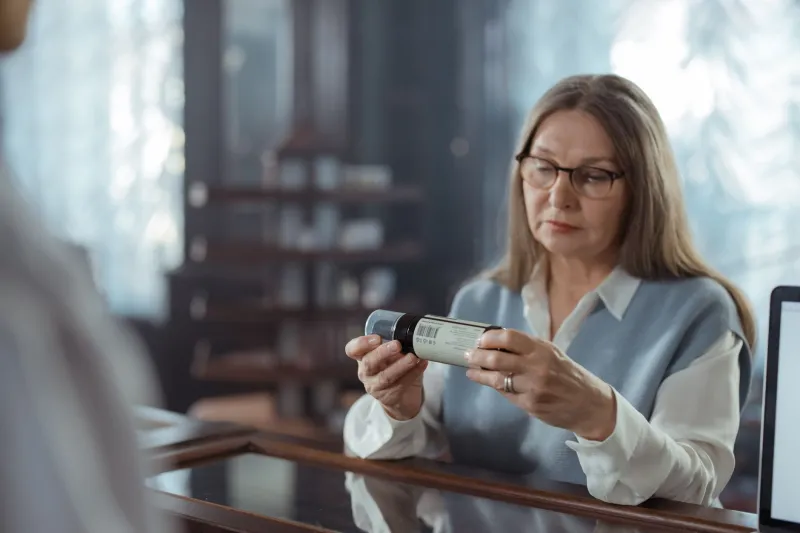
A productive conversation starts with the actual label, not the marketing name. Bring the bottle or a photo of the supplement facts panel and an up-to-date medication list, including prescriptions, over-the-counter drugs, and other supplements. Useful questions include:
- What are the exact ingredients and doses in this product, and are any hidden in a proprietary blend?
- Does any ingredient have a plausible interaction with my prescription medications?
- Should I separate this supplement from my thyroid medication or other drugs by a certain number of hours?
- What symptoms or laboratory changes should I watch for?
- Is there any reason to avoid this product because of my medical history, pregnancy status, or breastfeeding status?
- What evidence exists for the advertised breast-enhancement outcome, and at what dose was it studied?
- If I decide to try it, when should I stop and seek help?
- Are there safer or better-studied alternatives for my goal?
Reading Labels and Reporting Problems
Look for the amount per serving for each ingredient. Be cautious with proprietary blends that disclose only a total weight. Check whether the label lists plant part and extract ratio, and note any warnings. The FDA’s warning-letter database and MedWatch system are useful consumer resources; MedWatch also allows people to report adverse events. A report does not prove causation, but it contributes to the signal-detection system that regulators and clinicians use.
Finally, keep expectations proportionate. The evidence for herbal breast enhancement is not strong, and a supplement that promises dramatic change deserves skepticism. The safer posture is not “avoid everything natural.” It is “treat natural ingredients as active until proven otherwise,” and make medication interactions part of the conversation before the first dose.